Travel risks rise as US tightens scrutiny of non-immigrant visas
Washington, Dec 21 (IANS) The United States has tightened scrutiny of non-immigrant visa holders, triggering delays in visa interviews, restricting where applicants can seek visa stamping and expanding social media vetting — developments that an immigration expert warns could disrupt travel and employment for thousands of foreign professionals, a large number of whom are from India.
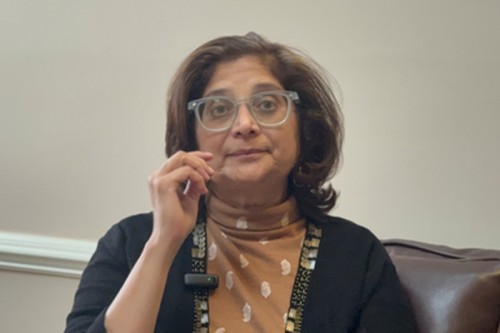
According to prominent US immigration attorney Aparna Dave, the changes have already begun affecting visa applicants across categories, including H-1B, F-1 and J-1 visas, with US consulates postponing scheduled interviews as they conduct more extensive background checks.
“My recommendation is if you really don’t have to travel, if there is no emergency, it’s best to stay put in the United States,” Dave told IANS in an interview, warning that international travel now carries heightened risk even for those with valid visas.
Dave said the new rules have effectively ended the long-standing practice of applying for US visa stamps in third countries.
“The rule has come into effect that you either go to get a visa in the country of your residency… or you have to go to your country of citizenship,” she said, noting that applicants who previously relied on appointments in Canada or Mexico may now face serious difficulties.
She also highlighted expanded scrutiny of visa applicants’ online presence. “What the government has said is that they have the right to check people’s social media,” Dave said, adding that applicants may be required to make their accounts public. “Everybody’s social media is going to be checked.”
As a result, she said, visa processing timelines have already been disrupted. “A lot of interviews, which were already scheduled in December and January, have all been postponed,” she said, explaining that consulates now require additional time “to vet all the applicants.”
Dave cautioned that risks do not end with visa interviews. “Even at the port of entry, the CBP officer does have the right to check your phone and social media,” she said. While travellers may ultimately be admitted, she warned that delays and secondary screening can have serious consequences. “Those delays can affect your employment or whatever other status you are in. So it’s just not worth it.”
She also addressed widespread confusion among visa holders about the difference between visa validity and lawful stay. “Visa is an entry to the United States,” Dave said, while the I-94 record governs how long an individual can remain in the country. “Even if your visa has expired, you can remain in the country based on that I-94,” she said, as long as the status has been properly extended.
Only individuals who travel abroad and seek re-entry need a valid visa stamp, she said. “You do not need to go out of the country to get a visa stamped unless you really have to travel out of the country.”
On enforcement standards, Dave said there is still limited clarity on how social media reviews will be conducted or what content may be deemed problematic. “We don’t know that yet because this has just started,” she said, adding that definitions of what constitutes a national security concern remain unclear.
For Indian nationals and families, she advised caution and restraint. “Maintain a low profile,” Dave said. “Refrain from posting anything on social media, which is political, religious… it’s sometimes just not worth it.”
Responding to a question on the new $100,000 application fee for H-1B visas, she said: “H-1B, as we all know, there was… an executive order where the president had said that it’s going to be a hundred thousand dollars… for every new H-1B,” she said, clarifying that the fee would apply only to workers coming to the United States for the first time and obtaining their visa stamp abroad.
“This only applies to people who are coming to the US for the first time,” she said. “If you’re already in the United States… then the hundred thousand dollars does not apply to those people.”
However, employers sponsoring candidates from outside the US would bear the cost. “If you’re filing for somebody who’s abroad… the employer is required to pay a hundred thousand dollars for that particular application,” Dave said.
She added that while higher prevailing wages for H-1B workers have been discussed, no formal changes have yet been implemented, with more clarity expected ahead of the March H-1B lottery.
Indians form the largest group of H-1B and F-1 visa holders in the United States, particularly in technology, healthcare and higher education. In recent years, visa backlogs, security checks and travel disruptions have increasingly affected Indian professionals and students.
The H-1B programme, capped annually by Congress, remains a key pathway for skilled foreign workers, especially from India. Any tightening of travel, vetting or cost structures is therefore closely watched in both Washington and New Delhi, given its potential impact on employment, education and family mobility.

|

|